
How to Check Criminal History in Colorado Springs
Begin with the kind of proof needed. A CSPD report tells what officers recorded about a city event. A municipal docket tracks an alleged city-code violation. The county jail page shows current custody data, and a Fourth Judicial District file shows state charges after filing. CBI’s Internet Criminal History Check supplies a Colorado repository view, but it does not replace any of those source files.
- Use the Colorado Springs Police Department channel for a city police report, dispatch item, local contact check, or listed media product.
- Give the report number, date, place, names, and exact product when known. Broad wording can add review time and cost.
- Contact Colorado Springs Municipal Court when the summons names that court or concerns a city charter or ordinance case.
- For jail custody or a filed state case, use EPSO booking records and the Fourth Judicial District clerk.
- Use CBI ICHC for the statewide fingerprint-supported history reported to the repository.
A blank result in one system is not a clean-history finding. A cited person may never enter jail, a new case may not yet be filed, or CBI may not have received a disposition.
Inside Colorado Springs Police Accela
The city’s Accela portal turns a request into a tracked record. A user creates an account, opens Police Records, starts a new request, and selects either an inquiry or a records request. The form asks the user to correct or add an address, choose the type of record, enter known search facts, acknowledge the instructions, and complete checkout when a fee applies. The receipt number begins in a form like POL-RRQ. Released PDFs appear under Request Info and Attachments.
The official CSPD page shows the city police operation that creates these files.
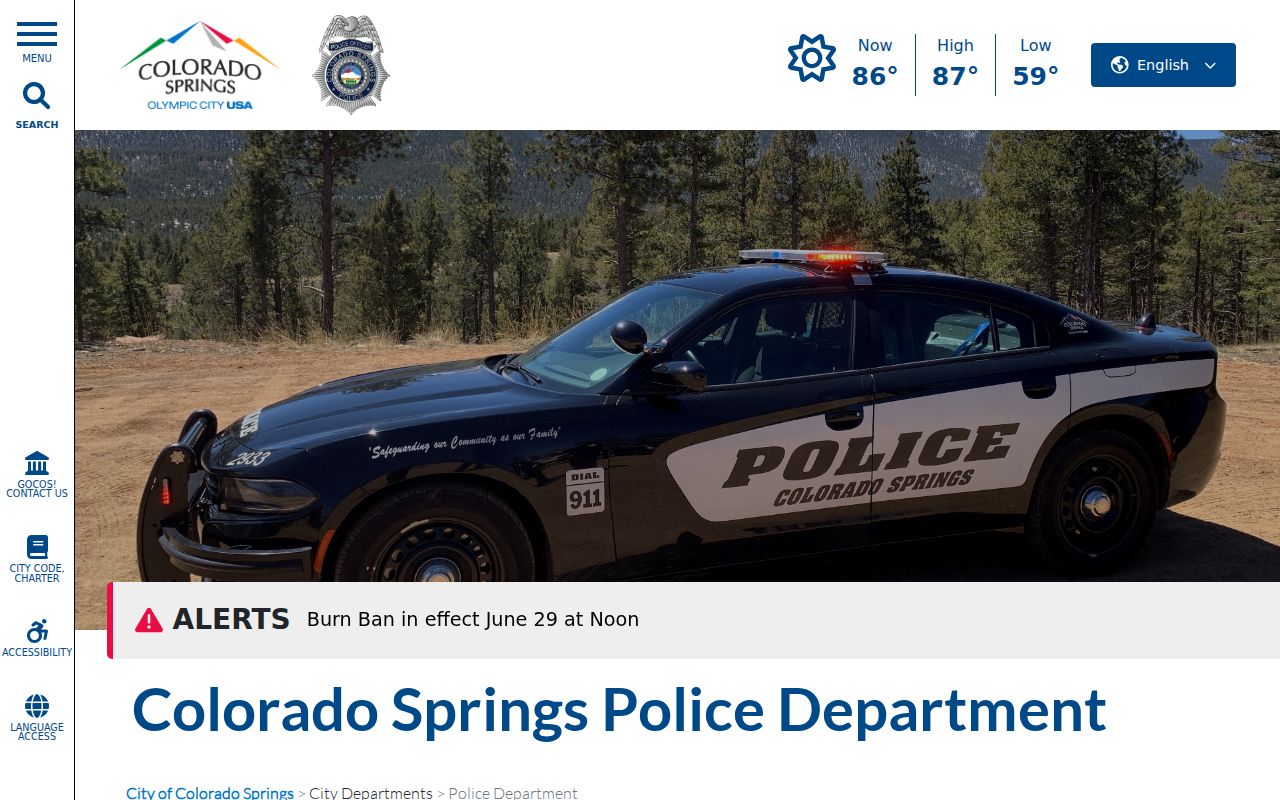
That city source is the right first stop for CSPD activity, not for an EPSO deputy report or a statewide history.
The Colorado Springs Police Department
CSPD Records and Identification works at the Police Operations Center, 705 South Nevada Avenue. The records and status line is 719-444-7463. It can release police and traffic reports, calls for service, 911 or radio audio, local checks, and other listed products under the rules that apply to each file. The CSPD local history is city-only. It should not be described as an El Paso County or Colorado background record.
The records release page distinguishes online items from specialty requests.
This division matters because forensic photos use a separate offline form, body-worn camera material has its own request route, and internal-affairs material may require direct wording or contact.
Reports normally arrive as PDF attachments. A standard report, local check, or booking photo starts at $10, while added pages, media work, and redaction can raise the amount. A booking-photo request requires the full name and date of birth. None of those products proves a conviction.
Colorado Springs Record Fees
The CSPD fee schedule is the source for current copy, research, audio, photograph, and registration charges.
The schedule explains why a narrowly framed Colorado Springs request is easier to estimate than a demand for every item tied to a name.
Ask for the exact police report, date range, call, or media segment. Redaction means protected details were removed before release. It does not mean the records staff failed to search. Juvenile facts, victim information, private identifiers, active investigative detail, and court-restricted material may be withheld.
Arrests and Bookings in Colorado Springs
A Colorado Springs arrest can create records at two offices. CSPD keeps its incident report and may offer a booking-photo product. If the person enters the El Paso County Jail, EPSO creates the booking, custody, bond, hold, warrant, and release entries. The public inmate page is searched by last name or booking number. Its detail does not show a mugshot, arresting agency, officer, narrative, or statute number.
Use the EPSO inmate search for current custody and call Booking at 719-390-2151 when release, bond, or appearance data is time-sensitive. Then return to CSPD for its narrative and to the named court for the filed charge and outcome. The broader El Paso County arrest history explains that county layer without turning a city request into a countywide search.
Colorado Springs Summons Colors
A blue-bar summons is a strong local routing clue. It points to Colorado Springs Municipal Court. A green-bar summons written by the sheriff or State Patrol points toward El Paso County Combined Courts. Read the court name, address, issuing agency, and appearance instructions rather than choosing a counter only because both buildings are downtown.
This distinction prevents a common false negative. The Robert M. Isaac Municipal Court Building and the El Paso County Judicial Building hold different case sets. A municipal clerk cannot confirm that no District or County Court matter exists, and a county court search is not a substitute for checking a city ordinance case.
Note: The summons itself is often the best first routing document.
Colorado Springs Municipal Court Records
Robert M. Isaac Municipal Court, 224 East Kiowa Street, handles city charter and ordinance traffic and criminal matters. The general court line is 719-385-5928, and published weekday hours are 8 a.m. to 4 p.m. No official public name-based case search was located in the research, so the clerk counter, phone, email, and court payment channels are the reliable fallbacks.
The official municipal court page identifies the city court and its services.
It should be used only for the city matters assigned there. State felonies and misdemeanors belong to the Fourth Judicial District.
| Court Name | Colorado Springs Robert M. Isaac Municipal Court |
|---|---|
| Case Types Heard | City charter and ordinance criminal and traffic matters |
| Case Lookup Channel | Clerk counter, phone, email, and the official court channels; no stable official public name search was found |
| What the Docket Shows | City charge, hearings, plea or other disposition, sentence, and payment activity when public |
| Copies & Fees | Ask the clerk for the current charge and the exact record sought |
Colorado Springs Municipal Warrants
Municipal warrants have a separate city counter in Room 108 at 224 East Kiowa. The phone is 719-385-6153, and the email is MunicipalCourtWarrants@ColoradoSprings.gov. Failure to appear or comply can lead to a warrant. Each municipal warrant has a $40 service fee, and a judge sets bail. A clerk may arrange a new appearance when bail is $200 or less; a higher amount requires full cash or a commercial surety.
The municipal warrant page describes that city process.
A city warrant check does not clear an El Paso County court warrant. Call the issuing court before appearing and follow the court named in the case.
Where Colorado Springs Records End Up
CSPD writes the city police report. EPSO creates jail data when county booking occurs. Prosecutors and the proper court create a filed case, and a final court disposition should reach CBI. Each source answers a different question, and timing can leave a temporary gap between them.
Record flow: Colorado Springs Police Department › El Paso County Courts › Colorado Bureau of Investigation, Biometric Identification and Records Unit
Check CSPD first for the recent narrative. Use jail data for custody, the court file for charges and outcome, and ICHC for the later statewide repository view. CBI warns that tickets, summonses, and missing disposition reports can be absent.
Colorado Springs Remote Disposition
Remote disposition is a limited accommodation, not a way to close any municipal case online. An eligible person should ask at least ten days before court. The prosecution response may take five to seven business days. The clerk can explain the request channel, but only the court process determines whether remote handling is allowed.
Adult municipal cases in which all charges are dismissed or the person is acquitted are automatically sealed under C.R.S. 24-72-705. That rule is distinct from a finding that a case never existed. A person checking an own record should confirm the court entry and, when relevant, the later public access status.
Public Access Rules for Colorado Springs Records
Colorado police records are governed chiefly by the criminal-justice records law, while court access follows Judicial Branch rules. A custodian may release basic official-action facts yet redact or deny protected investigative content. Sealed cases, juvenile data, victim details, private identifiers, and court-prohibited records can be unavailable.
Key Statutes:
Colorado Open Records Act, C.R.S. 24-72-200.1 through 206 governs access to general public records, subject to exceptions.
Colorado Criminal Justice Records Act, C.R.S. 24-72-301 through 309 controls inspection and release decisions for police and criminal-justice records.
Chief Justice Directive 05-01 governs public, courthouse, and remote access to Colorado court records.
Public access does not establish guilt. Check the final disposition before drawing a conclusion from an arrest or early charge.
Colorado Springs Dismissals and Sealing
An adult municipal case with every charge dismissed or acquitted is automatically sealed under Colorado law. That rule matters when a person reviews an old Colorado Springs case and finds it missing from public access. The absence can reflect lawful sealing rather than an indexing fault or proof that the event never occurred.
Begin with the municipal outcome. Confirm whether every count ended in dismissal or acquittal, since one count cannot stand in for the whole case. If a qualifying case still appears publicly, ask the court about its record and verify the person’s own repository history. The Judicial Branch maintains a sealing forms hub for other relief paths.
Sealing restricts public access. It does not rewrite the old outcome or promise that every government record is destroyed.
Colorado Springs Accela Request Screen
The official CSPD Accela screen shows the account-based city request channel.
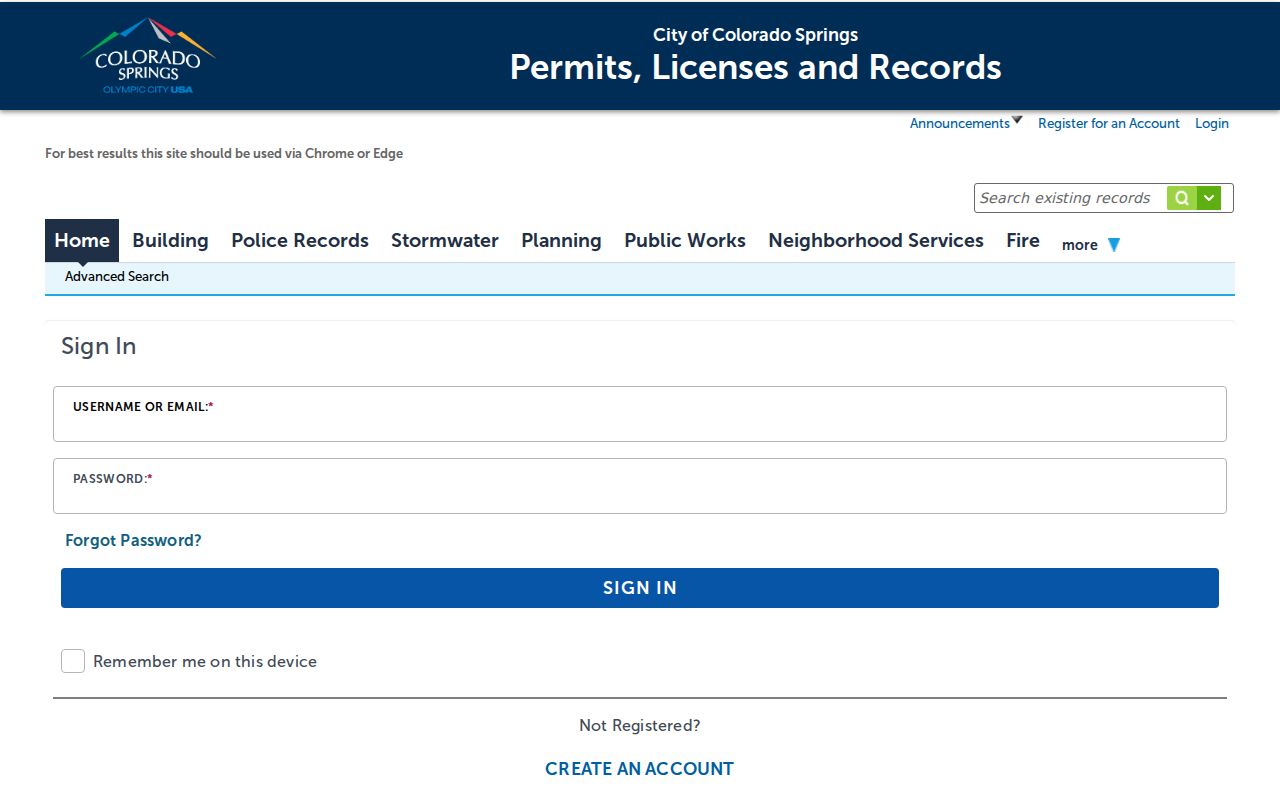
The screen supports a tracked city police request, while county custody, court disposition, and statewide history remain in their own systems.
Other Colorado Springs Record Relief
Other Colorado Springs outcomes follow different sealing paths. A conviction petition, a non-conviction filing, an automatic process, and juvenile expungement are not interchangeable. Use the form family that fits the exact court and disposition. Some convictions are excluded by statute, and a court order must reach the agencies that maintain the affected records.
After processing, review the court’s public access and one’s own CBI history. A stale entry should be raised with the custodian that can verify the signed order. This follow-up checks the systems that receive the order without treating sealing as a change to the historic outcome.